About MUFFLE FURNACE
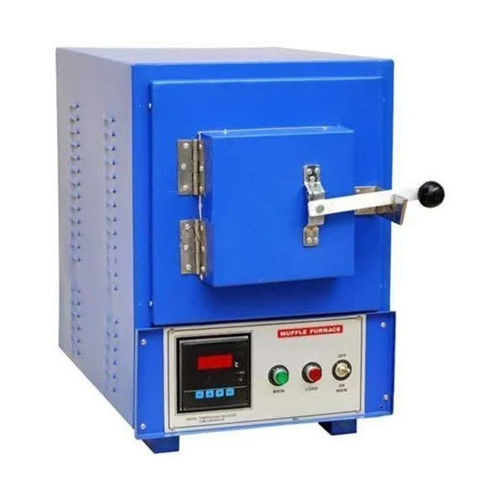
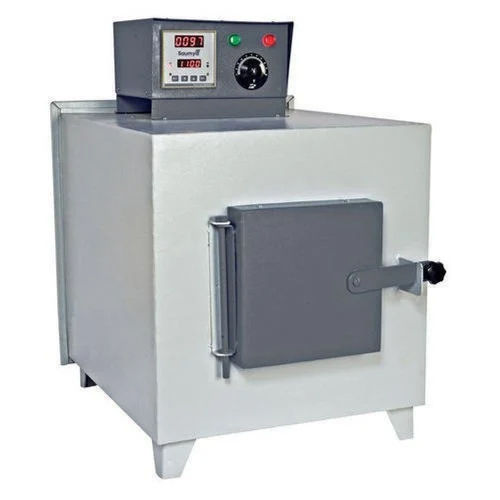
A muffle furnace is a laboratory instrument used to heat materials to extremely high temperatures whilst isolating them from fuel and the byproducts of combustion from the heat source. Muffle furnaces allow for the isolation of a material to reduce the risks of cross-contamination and identify specific properties. This blog post will take a closer look at what a muffle furnace is and provide an overview of its applications and benefits.
Applications of a Muffle Furnace
Muffle furnaces are suitable for a wide variety of high-temperature applications and play a crucial role for scientists who need to determine how much non-combustible and non-volatile content is present in a sample. This equipment is also used to identify the chemical properties of a material at high temperatures, such as ceramics, enamel coatings, glass and others.
Some additional equipment applications include ash melting point analysis, brazing, drug inspections and pre-treatment of medical samples, materials research, nuclear fuel disposal, quality control, and water quality analysis. As shown, muffle furnaces are essential for many other applications and span several industries, from ceramics to textiles.
The industries that benefit from muffle furnaces include, but are not limited to, the following:
- Biomedical
- Ceramics
- Glass
- Pharmaceutical
- Plastic
- Textile
Benefits of a Muffle Furnace
As mentioned above, a muffle furnace is a crucial piece of equipment from which many applications and industries benefit. For example, they are ideal for ashing and heat treating samples. Further advantages of using a muffle furnace include the following:
- Cost-effective
- Energy efficient
- High heat-resistant material
- High thermal conductivity
- Material production: copper, low-carbon steel and stainless steel
- Robust, with long service life
- Temperature uniformity
- Various temperature ranges (200 to 1200C)
Temperature range: In muffle furnace there is maximum temperature range and continuous working temperature range. Our standard models are made with maximum temperatures 1100C and 1400C with working temperatures 1000C and 1300 respectively.
Heating Element: In muffle furnace 1100C imported Kanthal A-1 resistive wire heating elements are used; while in 1400C high temperature muffle furnaces, we use silicon carbide rods and MoSi2 (Molybdenum Disilicide) for 1600C, and 1800C.
Heating Zone: The heating zone is the most crucial part of any muffle furnace. For 1100C machine we make heating chamber of ceramic fibre board and for 1400C Ceramic Zirconium board is used. High density Ceramic fibre blanket is used as insulation to keep the outer surface at minimum temperature.
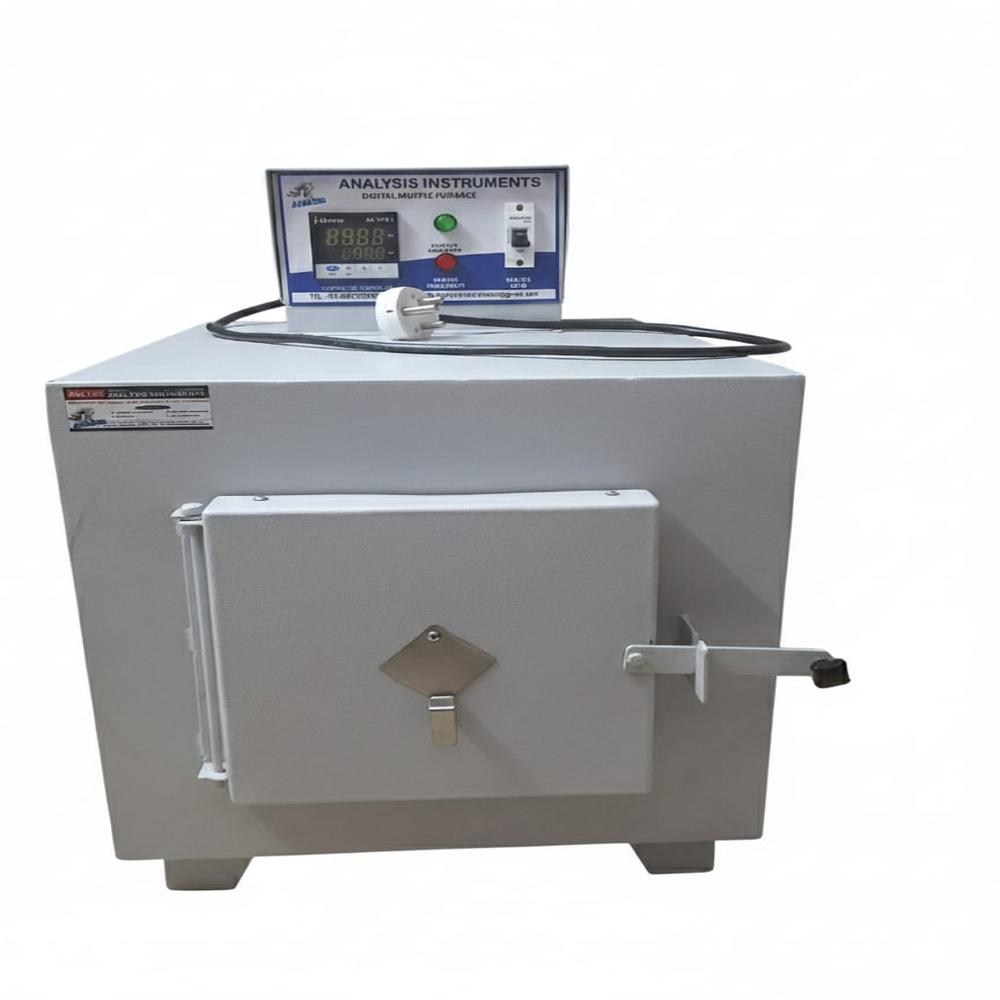
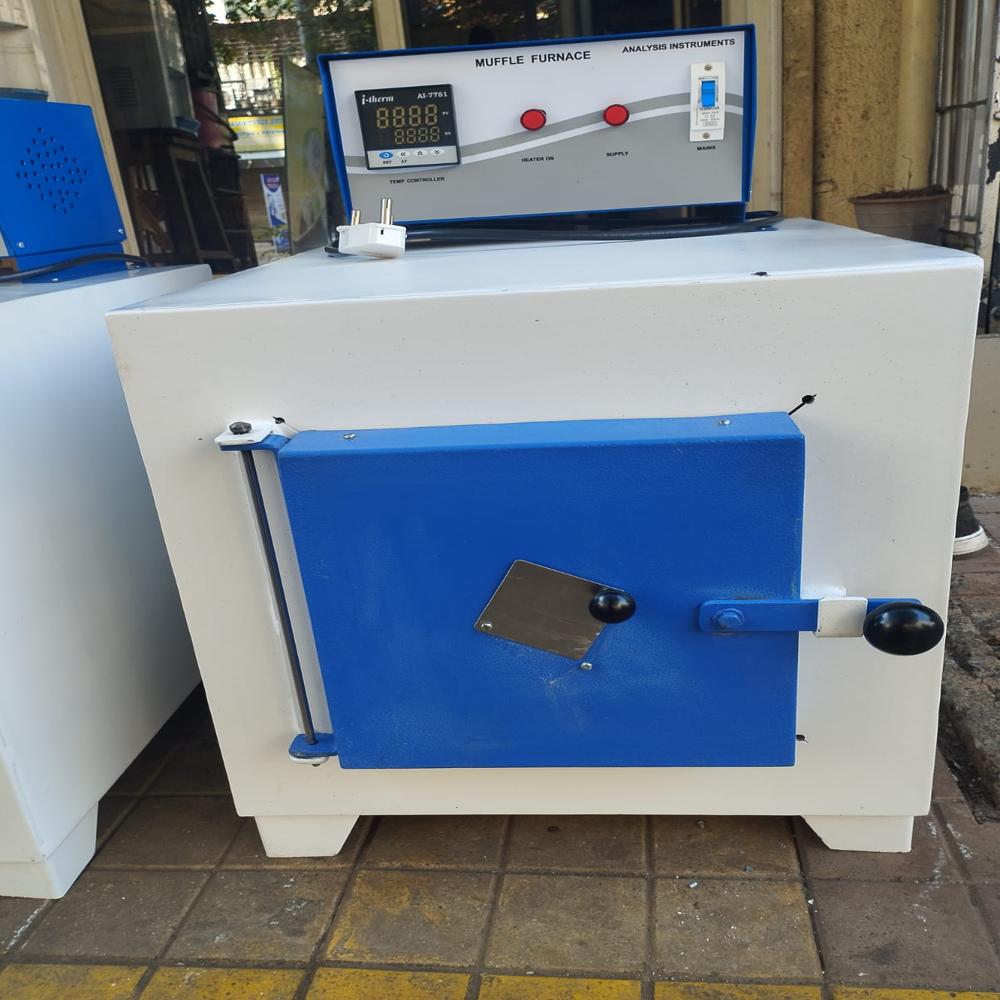
Controller: As standard microprocessor based PID temperature controller is fitted in each muffle furnace. These controllers feature excellent accuracy during the entire cycle and also keep displaying set value (SV) and process value (PV).
Construction: These laboratory furnaces are built on a thick steel frame. Outer cabinet is usually made of powder coated cold roll sheet. We also make GMP muffle furnaces with all stainless steel 304 grade sheets.
Optional Accessories: We also equip your programmable muffle furnace with choice of accessories to meet specific requirement of our clients. These accessories are PLC based HMI controller with data logging and PID controller with RS232 computer interface. Steel tong and gloves are standard accessories and supplied with every muffle furnace
Features & Benefits
- Available in 1100C, 1200C ,1400C, temperature
- Programmable (profile) temperature controller
- Excellent temperature accuracy & uniformity
- Imported heating elements
- Rugged construction for long run
- Fitted with safety devices
- Customization as per user requirement
Advanced Temperature Control and SafetyEquipped with a PID digital temperature controller, the muffle furnace ensures precise temperature management throughout your processes. The high level of accuracy (1C), over-temperature protection, and safety cutoff features keep samples and users safe. User-friendly control panels and digital timers with alarms add an extra layer of convenience and reliability, making it suitable for a wide array of laboratory and industrial applications.
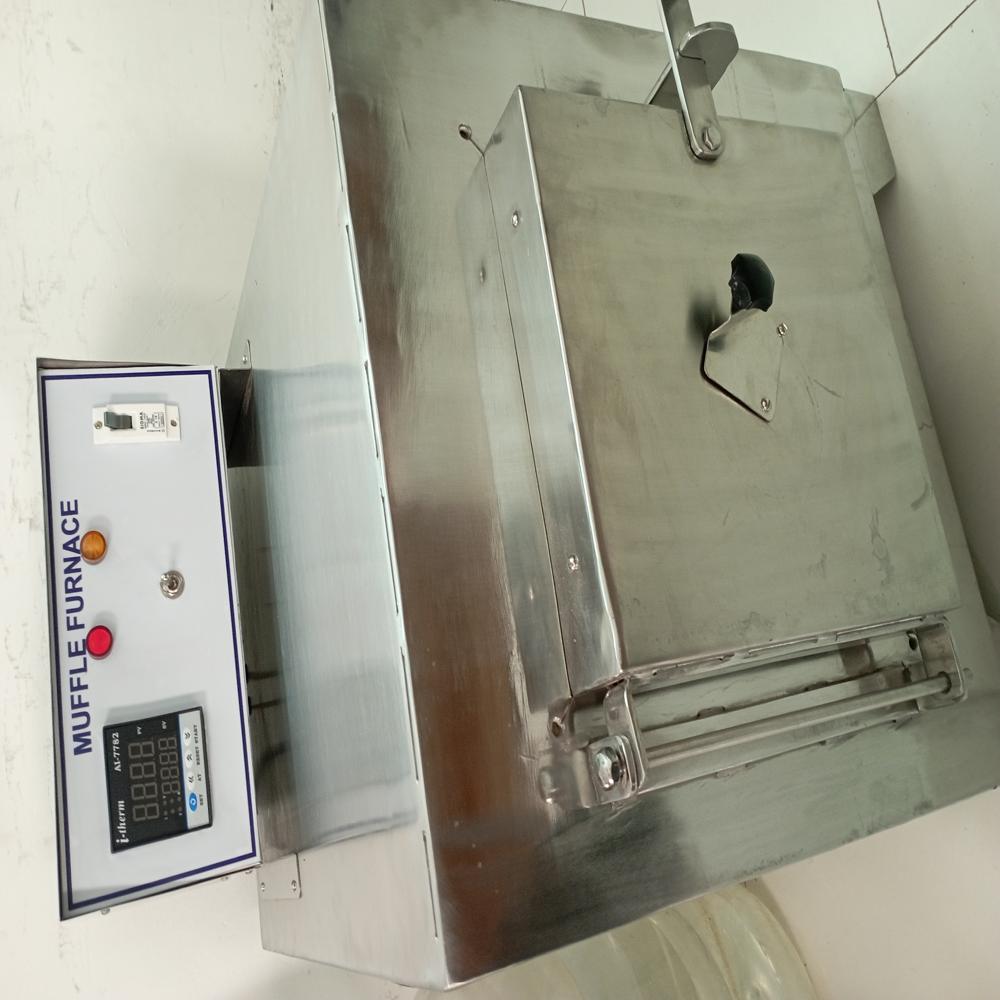
Durable Construction for Demanding ApplicationsThis muffle furnace is built with a stainless steel exterior for corrosion resistance and a heavy-duty, insulated swing-open door for longevity and performance. The inner chamber, composed of high-alumina ceramic, can withstand repeated high-temperature cycles. High-grade ceramic fiber wool insulation boosts thermal efficiency, minimizing heat loss and ensuring uniform temperature distribution throughout the furnace.
FAQ's of MUFFLE FURNACE:
Q: How does the PID digital temperature controller enhance the operation of the muffle furnace?
A: The PID digital temperature controller offers precise and stable temperature regulation by continuously adjusting heating cycles. This reduces temperature fluctuations, ensures accuracy within 1C, and optimizes heating profiles for ashing, annealing, and material testing.
Q: What heating elements are used in the furnace and what benefits do they offer?
A: The furnace employs Kanthal or Nichrome wires embedded in ceramic or muffle as heating elements. These materials provide rapid heat-up, high resistance to oxidation, and long-lasting service at elevated temperatures up to 1200C.
Q: When is over-temperature protection activated, and how does it improve safety?
A: Over-temperature protection is triggered when the internal temperature exceeds set safety limits. It activates the safety cut-off, shutting off power to the elements and signaling an alarm, thereby protecting both users and sensitive samples from overheating.
Q: Where can the muffle furnace be used, and what are its primary applications?
A: This muffle furnace is suitable for laboratories, research institutions, industrial settings, and quality control facilities. Its typical applications include ashing, annealing, sintering, material testing, heat treatment, and related thermal processes.
Q: What process is followed to heat the chamber to maximum temperature, and how long does it take?
A: Once the desired temperature is set via the digital controller, the furnace automatically ramps up the heating elements. Depending on chamber size, it typically reaches the maximum temperature of 1200C within 15-30 minutes.
Q: How does the insulation and chamber design benefit the furnace's performance?
A: The use of high-grade ceramic fiber wool insulation ensures optimum thermal efficiency and minimizes energy loss, while the rectangular, high-alumina chamber promotes even heat distribution, enhancing process consistency and sample integrity.

 Send Inquiry



 Send Inquiry

 Send Inquiry